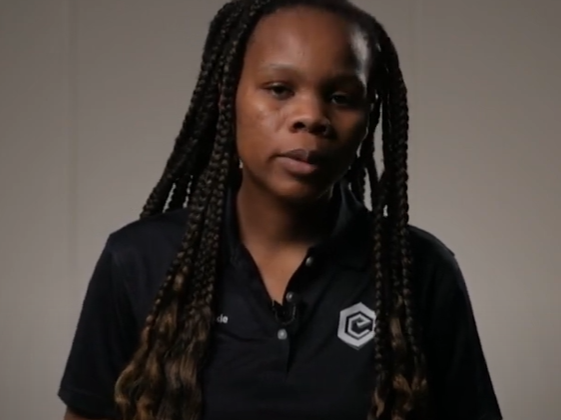
Does Entrepreneurial support influence entrepreneurial intentions in South Africa?

Researcher:  Tshegofatso Kgomo, University of the Witwatersrand, Johannesburg
Supervisor: Prof. Rod Alence, University of the Witwatersrand, Johannesburg

High youth unemployment and low economic growth are challenges in South Africa (SA).  Entrepreneurship is considered an essential catalyst for this challenge. For entrepreneurship, entrepreneurial intentions (EIs) are pivotal because they are the first step to entrepreneurial activity. Whilst entrepreneurial support (ES) enables potential entrepreneurs to convert their EIs into new businesses.  The current project had 1 aim:   To gain insight into whether ES influences EIs in the South African context.


Read More

Parallel Algorithm for Genotype Data

Researcher:  Taryn Michael, Sol Plaatje University
Supervisor:  Prof. Scott Hazelhurst, University of the Witwatersrand, Johannesburg

Genotype data helps understand how genetic variations lead to genetic diseases This data is extremely large to store and analyze efficiently Thus, the PLINK format was introduced to save storage space.  This research implemented a data parallel algorithm in Rust to convert raw genotype data into the PLINK bed and bim format to speed up processing time


Read More

Shutting it down: The Relationship between Regime Types and Internet Shutdowns during Elections

Researcher:  Nerissa Muthayan, University of the Witwatersrand, Johannesburg
Supervisor:  Prof. Rod Alence, University of the Witwatersrand, Johannesburg

The principles of democracy are crumbling, as the internet is becoming more censored.  Internet shutdowns during elections are detrimental to democracy and indicate a dangerous disregard for human rights and effective governance.  This study examined the relationship between regime types and internet shutdowns during elections.


Read More

An Investigation into the Design of Bee-inspired Swarm Intelligence Ontology

Researcher:  Mukhethwa Mulangaphuma, Sol Plaatje University
Supervisor: Dr Colin Chibaya, Sol Plaatje University

Swarm robotics is an AI field focused on applying swarm intelligence paradigms and methodologies to groups of homogeneous robots to perform difficult tasks that individuals cannot.  Social insects and other living creatures inspire swarm robotics. This research is aimed at creating a language for designing swarms of bee agents to perform preferred emergent behavior.  First, we investigate the primitive behaviors that define bee agents’ discrete actions at the individual level. Eighteen of these primitive behaviors have been identified as potential building blocks for the bee agent language. The identified primitive behaviors are then translated into computational terms. The identified primitive behaviors are then combined to form an ontology (a set of primitive behaviors and meta data describing how and when primitive behaviors are utilized).  Permutations of a collection of primitive actions specify the search space for the best performer set of rules for specific assignments.


Read More

Automatic Karyotyping using Image Semantic Segmentation to Separate Overlapping Chromosomes

Researcher:  Boineelo Sekori, Sol Plaatje University
Supervisors:  Dr Albert Whata, Sol Plaatje University

This study aims to automate karyotyping to successfully separate the overlapping human chromosomes.  The objectives are as follows:
1. Automate semantic segmentation task for separating overlapping chromosomes.
2. Perform human karyotype chromosome segmentation using deep learning algorithms.
3. Assessing deep learning models in the semantic segmentation of separating overlapping chromosomes.
4. Evaluate the performance of the adapted and modified deep learning architecture.


Read More

Solving electricity crisis in SA

Researcher:  Kgothatso Makubyane, University of Limpopo
Supervisor: Dr Caston Sigauke, University of Venda

According to Council for Scientific and Industrial Research (CSIR), South Africa is experiencing the worse year of load shedding. However, the is a solution to this obstacle Renewable energy resources (Wind, Sun and Water). The primary subject of this research is to demonstrate how reliable and efficient wind is for generating electricity in the Western Cape Province, Cape Town City.


Read More

From Above the Sky to Below the Earth: Crop type classification using satellite imagery and deep learning

Researcher:  Yusuf Mansoor, University of the Witwatersrand, Johannesburg
Supervisor: Prof Adam Elhadi, University of the Witwatersrand, Johannesburg

Crop type mapping and classification is necessary for optimal cropland management. Remote sensing with satellite imagery has gained popularity due to the ease of accessibility and availability.  For this study deep learning neural networks will be assessed due to their superior accuracy and robustness.  The aim of the study was to assess the performance of NN for crop classification. And to determine the optimal temporal window for classification.


Read More

Aspects of simulated ant agents for creating an ant-inspired ontology

Researcher:  Shirindi Ntshuxeko, Sol Plaatje University
Supervisor: Dr Colin Chibaya, Sol Plaatje University

A formal knowledge domain has not been well represented in earlier studies.  There has been a lack of a particular set of procedures required to produce an ant ontology.  To create an ant colony ontology, this work aims to discover and define the fundamental traits of a simulated ant system.


Read More

Determining & Understanding Student Engagement Levels on Online Educational Platforms

Researcher:  Eli Nimy, Sol Plaatje University
Supervisor: Dr Moeketsi Mosia, Sol Plaatje University

In recent times, universities have become greatly dependent on the use of online educational platforms (OEP) such as Moodle, Blackboard Learn and Canvas to share resources, assess, and communicate with students. But how can we support students that are not engaging and engaging with these platforms differently?


Read More

Battery as the source of energy

Researcher:  Mbabala Tshimangadzo, University of Venda
Supervisors: Dr. N.E Maluta , Prof. R.R Maphanga Mr. R.S Dima, University of Venda

There is an increase shortage of energy supply and storage, with the human population and fuel price increasing exponentially this increases the demand of energy supply. Considering battery as the source of energy supply will require the discovery of materials but the traditional method of doing this is not only expensive but also very slow. This project applies machine learning algorithm which will accelerate the discovery of battery materials with the desired properties which is quick and cheaper, this will not only helps us in our homes but also in our vehicles.


Read More